Skin Assessment Report
Red, itchy, dry rash.
In 2022, the patient underwent blood tests for skin sensitivity and was diagnosed with Systemic Lupus Erythematosus (SLE). Topical creams were prescribed to relieve itch and inflammation, and the patient also purchased health supplements online to support immune function. More recently, a separate specialist assessment concluded there was no confirmed SLE diagnosis — the presentation was attributed to ordinary contact dermatitis. The patient is currently not on any medication.
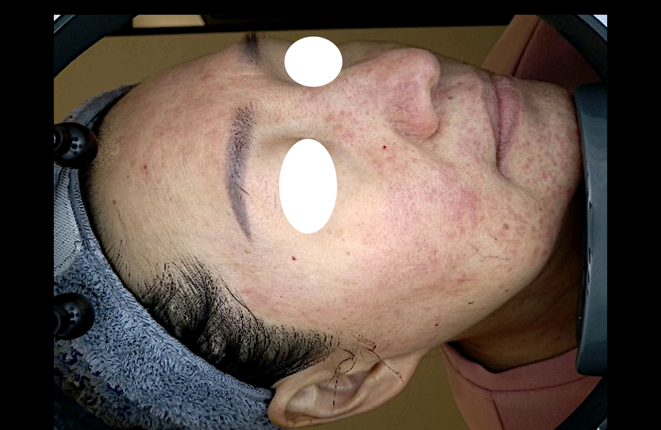
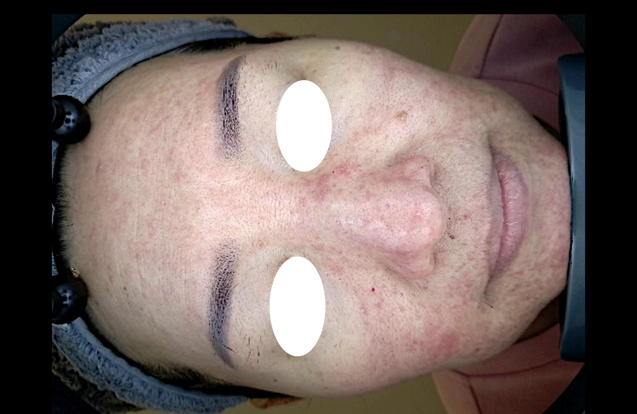
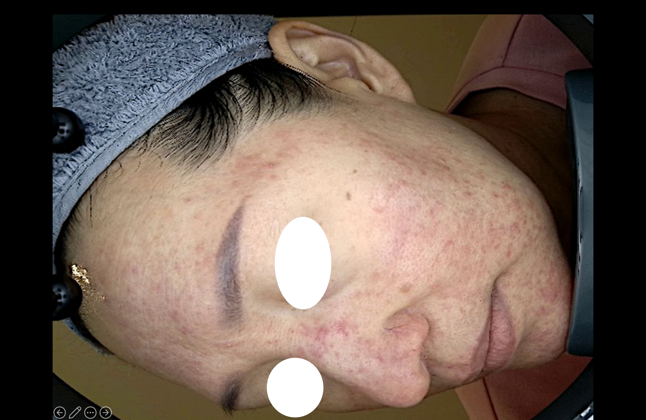
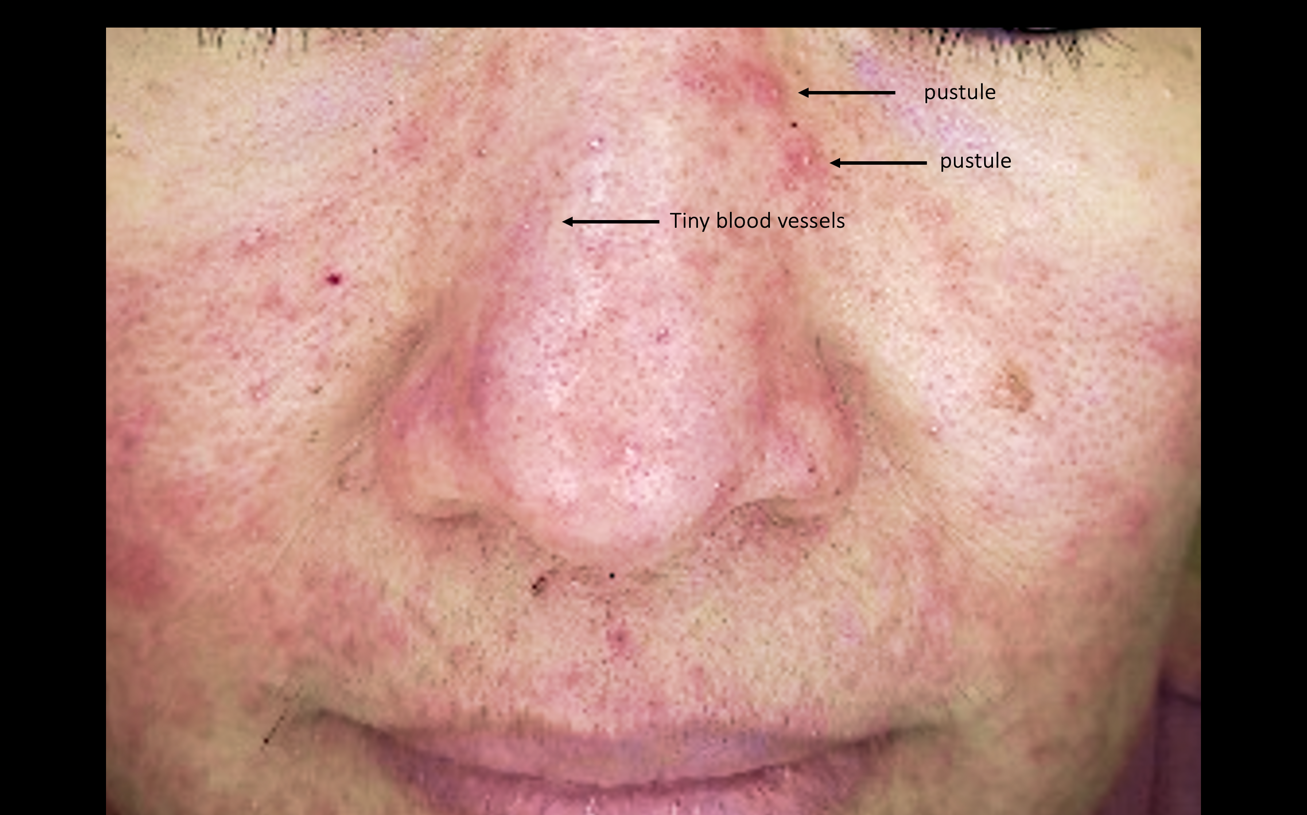
Clinical photographs have been obscured to protect patient confidentiality.
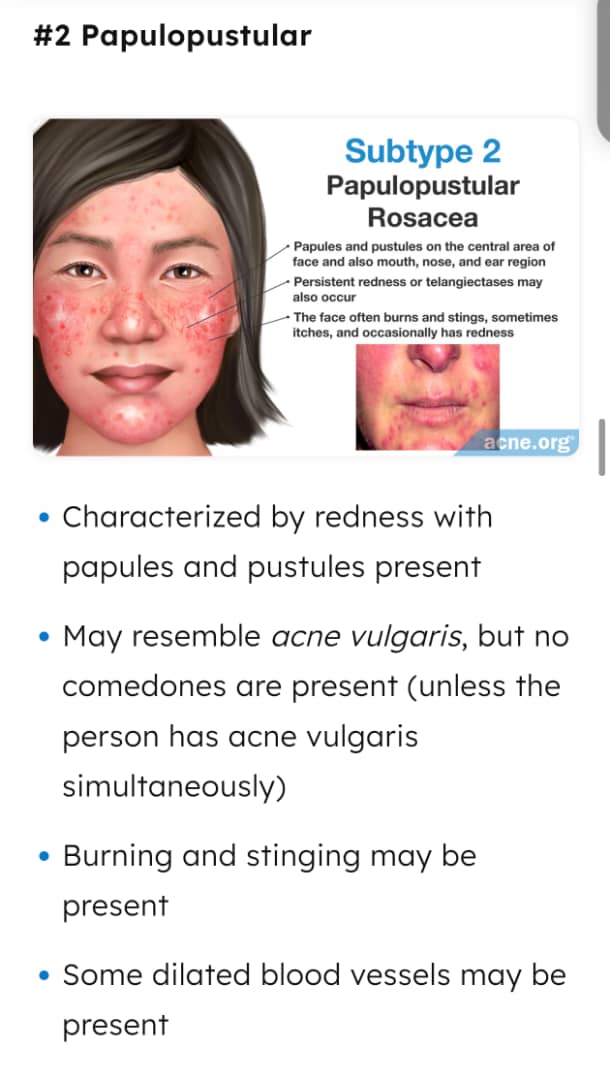
- Numerous monomorphic erythematous macules and small papules over the cheeks, nose, and chin.
- Absence of comedones or nodules, making acne vulgaris less likely.
- No adherent scale, sharply demarcated plaques, or yellow greasy flakes to suggest psoriasis or seborrhoeic dermatitis.
- Symmetrical, centrofacial involvement, predominantly on convex surfaces, with sparing of concave areas (nasolabial folds, periorbital sulci).
- This is a classic rosacea / photo-distribution pattern — the opposite of seborrhoeic dermatitis.
- Prominent telangiectasia on close-up inspection or dermoscopy.
- Flushing triggered by heat, sun exposure, alcohol, spicy food, or emotional stress.
- Ocular symptoms such as dryness or a gritty/sandy sensation.
If rosacea is confirmed — please discuss all treatment options with your treating physician.
- Heat and UV exposure
- Alcohol and spicy foods
- Emotional stress
- Use gentle, non-irritating cleansers
- Apply a simple, fragrance-free moisturiser
- Minimise friction and exfoliation
- Metronidazole
- Ivermectin
- Azelaic acid
- Doxycycline or similar agents for persistent or more symptomatic cases
⚠ Seek further evaluation if red-flag features appear: rapid progression, systemic symptoms, or severe ocular involvement.
For more information on rosacea, including triggers, subtypes, and treatment options:
www.acne.org/rosacea →